Visual Note · Shakespeare · tragedy · literature study
Macbeth — A Study Map
A compact visual orientation to Shakespeare's tragedy: its central tensions, recurring motifs, and the questions that lead into the Reading Macbeth series.
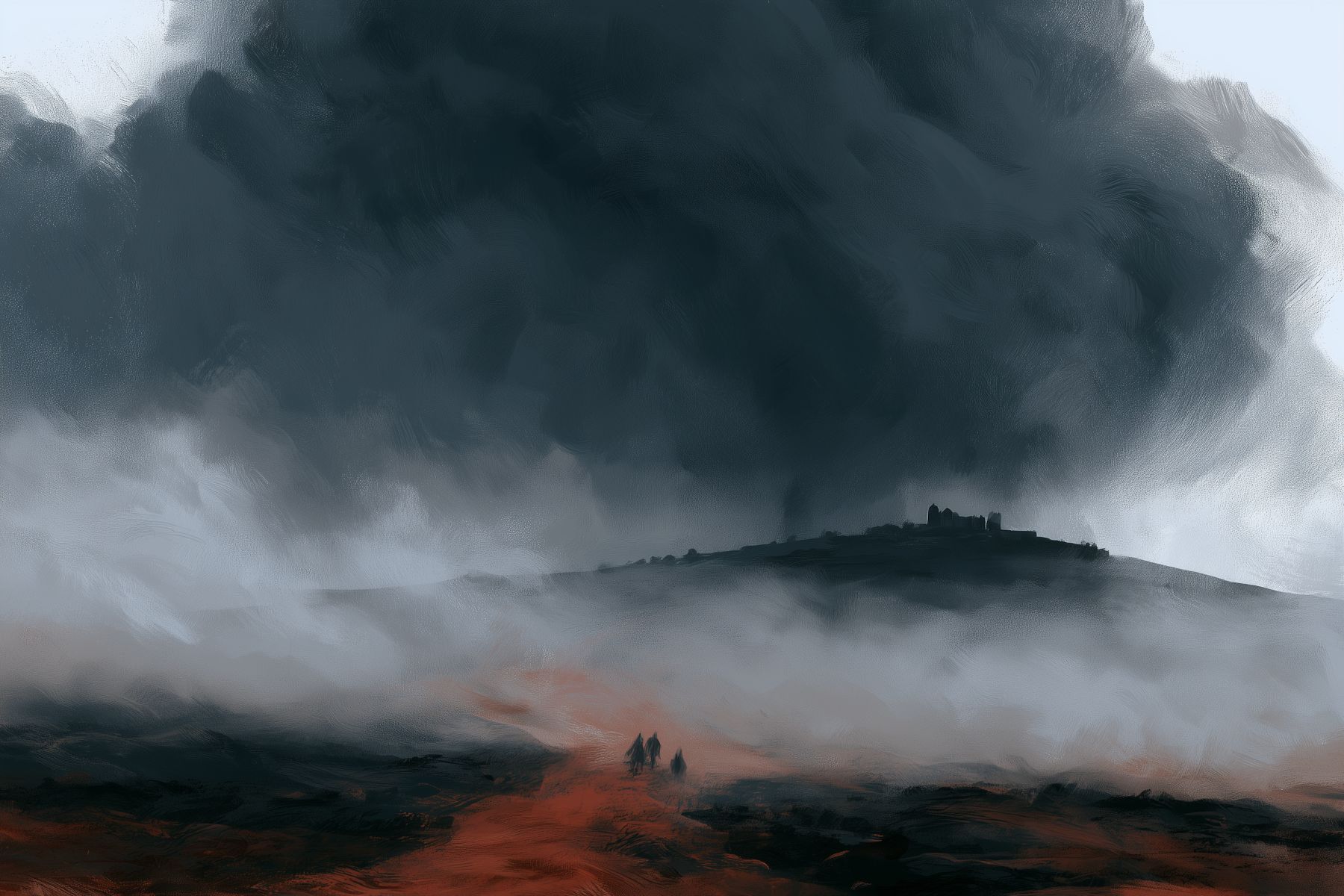
Macbeth is a tragedy about a possible future becoming an excuse for present action. The witches predict that Macbeth may become king; Macbeth and Lady Macbeth decide what that prediction will require. From that point forward, the play keeps asking where influence ends and responsibility begins.
At a glance
| Author | William Shakespeare |
| Genre | Tragedy |
| Date | c. 1606 |
| Commonly studied in | High school and introductory college literature |
| Central problem | What happens when ambition turns possibility into permission? |
The play’s pressure points
Ambition is not simply a desire for success. Macbeth’s ambition becomes dangerous when he treats a crown as something that must be secured immediately, regardless of the cost.
Fate and free will are kept deliberately unstable. The witches speak in predictions, riddles, and conditions; Macbeth supplies the decisions that make their words consequential.
Guilt changes shape. At first it appears as fear and imagination. Later it becomes numbness, insomnia, hallucination, and finally a bleak inability to recover meaning.
Masculinity is repeatedly used as a weapon. Characters test one another’s courage by equating manhood with violence, while the play exposes how fragile that equation is.
Kingship and political order give the private crimes public consequences. Duncan’s murder is not only the killing of a man; it is an assault on the language and rituals that make authority legitimate.
Characters to track
- Macbeth — a capable soldier whose imagination recognizes the moral cost of ambition before his will accepts it.
- Lady Macbeth — an acute reader of Macbeth’s hesitation who tries to convert courage into cruelty.
- Banquo — Macbeth’s companion in prophecy, whose restraint provides a counterexample to Macbeth’s response.
- Macduff — a figure of political resistance whose grief complicates the play’s ideas about manhood.
- Duncan — a generous but vulnerable king whose public goodness does not protect him from political blindness.
- The witches — agents of equivocation who awaken possibility without making decisions for anyone else.
Motifs and formal devices
Blood moves from visible evidence to an inward stain. It begins as a consequence of violence and becomes a way for characters to imagine that violence continuing to exist inside them.
Sleep marks the loss of ordinary human restoration. Macbeth’s crime attacks not only Duncan but the conditions under which a person can rest without fear.
Darkness and weather make the world feel morally unstable, but the atmosphere does not replace psychology. The stormy world reflects choices that characters are already making.
Equivocation makes language itself dangerous. The witches’ statements are not straightforward lies; they are truths arranged so that listeners draw the most destructive conclusion.
Dramatic compression gives the tragedy unusual speed. The play moves from prophecy to murder to tyranny with very little time for Macbeth to settle into the identity he has chosen.
Recurring essay questions
These questions are useful because each one asks for an argument rather than a plot summary:
- Is Macbeth responsible for his own downfall?
- Can Lady Macbeth create Macbeth’s ambition, or can she only expose it?
- What do the witches actually cause?
- How does blood imagery change across the play?
- What does Macbeth suggest about masculinity?
- Why do Macbeth and Banquo respond differently to the same prophecy?
The essays behind the map
The Visual Note is the orientation. The individual arguments live in the Reading Macbeth series:
- Macbeth Is Not a Victim of Fate
- Lady Macbeth Cannot Make Macbeth Ambitious
- What the Witches Actually Do
- Blood That Cannot Be Washed Away
- Macbeth’s Problem with Masculinity
- Macbeth and Banquo Hear the Same Prophecy
The map gives the reader a way into the work. The series slows down over the interpretive problems that a classroom essay might ask the reader to solve.