Visual Note · television · streaming · media industry · screen culture
The Golden Age of Television Was Two Eras at Once — Prestige and Abundance
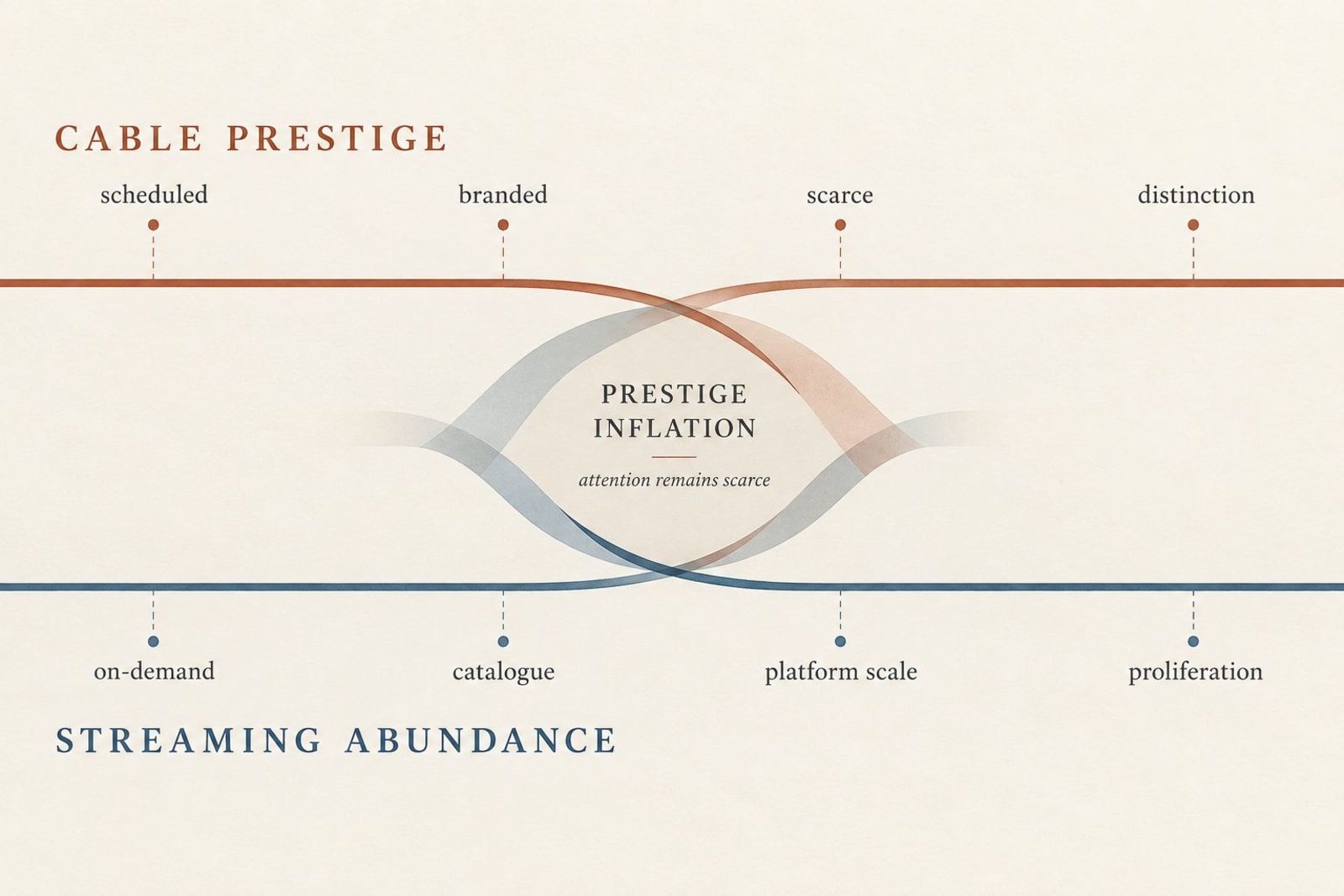
A two-track timeline separates cable prestige from streaming abundance and locates the pressure of prestige inflation.
The Golden Age of Television names a genuine expansion of creative possibility. It also compresses two systems with different ways of organizing attention.
Two tracks
Cable prestige was scheduled and branded. Scarcity made a channel’s distinctive programming valuable: it had to decide what to show at nine, and a shared broadcast time helped coordinate attention.
Streaming is on demand and organized through interfaces. Its scale reproduces the visible signals of distinction across catalogues. Instead of filling a particular time slot, a platform asks what keeps a subscriber watching; recommendations and publicity help direct attention.
Where the pressure builds
Cable prestige could make ambition feel unusual: a channel’s original drama differentiated the channel itself. Streaming did not simply end that system. It extended and multiplied its conventions across catalogues, territories, and platforms.
That multiplication produces Prestige Inflation: the supply of prestige signals grows faster than their power to confer distinction. Cinematic lighting, famous leads, short seasons, sombre promotion, and serialized seriousness can become familiar surface cues. Their abundance does not make television worse; it makes attention and discovery more decisive.
What the timeline does not claim
The two eras overlap. Cable brands move inside platforms; streaming borrows advertising, weekly releases, and scheduled channels. The timeline is not a claim that one system was pure, or that abundance prevents excellence. It is a tool for separating artistic quality, cultural coordination, and industrial health.
The essay behind the note
The Golden Age of Television Was Two Eras at Once follows the historical cases and the argument for treating durability as part of quality.