Visual Note · Mary Shelley · Frankenstein · adaptation · responsibility
Frankenstein: What the Familiar Monster Leaves Out
A short comparison maps how Shelley’s speaking Creature changes the question raised by the familiar screen image.
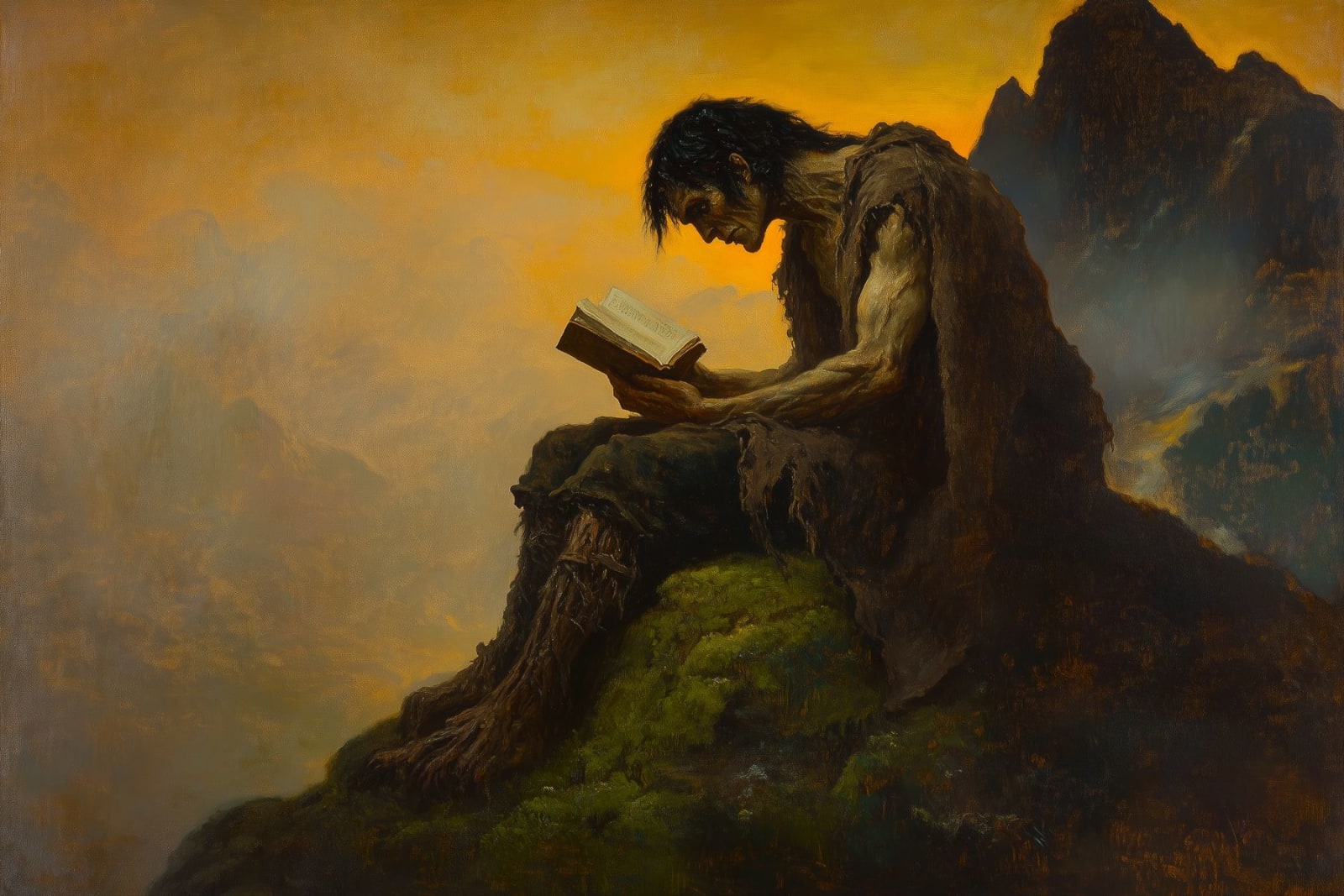
The familiar Frankenstein monster is easy to recognize. The being in Mary Shelley’s novel is harder to settle. James Whale’s 1931 film helped give the Creature a lasting visual identity, but the novel gives him something the image cannot: a sustained account of his own life.
Three Changes in View
From appearance to response. The screen image makes the Creature’s body immediate. Shelley also asks us to watch Victor: he recoils from the being he has just made and leaves him alone. The question changes from What is this? to What did his maker do next?
From gesture to testimony. A figure seen from outside can invite fear or pity. Shelley’s Creature learns language, reads books, and explains his rejection. We have to test his account instead of accepting Victor’s judgment of his face.
From danger to choice. The familiar image can make violence look like an inborn trait. In the novel, the Creature murders William and frames Justine after suffering rejection. Understanding his pain does not cancel his responsibility.
These comparisons contrast the familiar screen image with the novel’s narrative method; they do not claim that every film turns the Creature into the same character. Boris Karloff’s performance, for example, can convey vulnerability without giving the Creature Shelley’s long spoken defence. The British Film Institute’s account of the 1931 adaptation describes that change in emphasis.
Shelley’s 1818 text supplies the other side: Victor’s flight in volume I, chapter IV; the Creature’s appeal and education in volume II, chapters II and IV–VII; and his account of William and Justine in volume II, chapter VIII. These scenes leave the reader with two duties to consider at once: Victor’s duty of care and the Creature’s duty not to turn injury into revenge.
Why Does Frankenstein Still Feel Modern? follows that tension through the novel’s layered narrators. For a shorter introduction to Shelley and the book, see the Frankenstein reading note.